Digitalisation is typically defined in the context of business transformation, automation, and operational improvement. It's the work of bringing data, people, process, tools, and technologies together to support efficient, effective decision-making. Beyond the marketing jargon, digital continuity is the commonly aspired-to goal — with digitalisation as the means to that end.
Building and managing a business means managing data, managing people, defining and improving processes, and implementing tools and technology to support it all. Over time, it becomes managing more data, more complex information flows, newer technology, more automation, more cross-functional interaction, wider skills — across bigger teams, more people, and more advanced enterprise solutions. Both established and start-up businesses go through cycles to define and implement those roadmaps as they grow.
Driving greater data continuity is what "data plumbing" is about: building pipes to get data to the right systems and people. It isn't only about tools — data also flows through manual processes run by people, managed via governance. It's about creating a shared understanding that everyone can align on, using simple means to convey messages and help people collaborate toward a shared vision. Digital and data plumbers coexist with other operational and technical trades in the work of transforming the business.
This article pulls together multiple discussion points from conversations with Rob Ferrone over the years — about what data and digital plumbing mean for QR_ and its clients, and how that contributes to moving businesses forward, pragmatically.
Rob is one of QR_'s two co-founders and has been with the company since its inception more than 20 years ago. He often introduces himself and his fellow QR_ consultants as "digital plumbers" — a phrase that caught my attention because digital solutions often go far beyond the IT systems themselves.
So what, exactly, is digital plumbing?
Both digital and data. The plumbing of data through either manual activities or digital apps, tools, and interfaces is what the work is about:
- Connecting people and teams through a single version of data — driving product quality and enterprise excellence.
- Ensuring data and product quality are closely interlinked, so issues can be anticipated, predicted, and fixed as early as possible.
- Leveraging data to manage operations — feeding into the associated decision-making and governance processes.
- Turning data into information and business insight — understanding behaviours and driving change from better data authoring and consumption.
For simplification, digital plumbing and data plumbing can probably be used interchangeably. Nevertheless, data is clearly the driving force toward performance delivery and competitive advantage, whereas digitalisation is the enabler of effective collaboration, delivery speed, and accuracy.
How is the analogy perceived by your clients?
"Customers get it straight away," Rob explains. "They laugh at the blocked, leaking, broken-plumbing visual — a famous QR_ slide — and admit that it's how they see the state of their business."
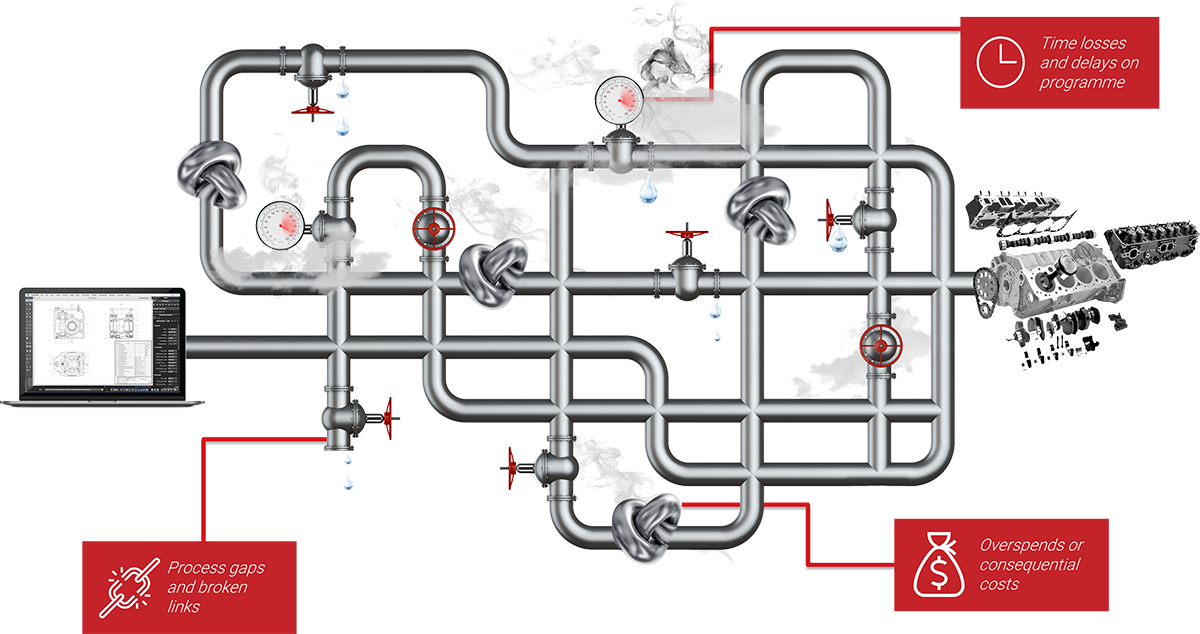
Digital plumbing is one side of the dice when it comes to data management and governance. An organisation can have great digital plumbing — but the question remains: how clean or dirty is the data being pumped through the pipes? Digital plumbers need to work holistically with users and the wider business to understand and help meet product and data quality requirements.
As Rob puts it: "Water for the garden can be rainwater, but drinking water must meet high standards. Do you have self-regulation in place? Maintenance? Other checks?" It's a matter of defining and optimising the ways of working — and the data standards — required to drive effective governance and manage cost implications.
What do digital plumbers bring?
What characterises the core skills and USP of digital plumbers, compared with more traditional business-transformation consultants? Digital plumbers need to have lived the work — to understand the difference between theory and reality, and to be capable of owning the embedding of a change. Classic consultants have rarely used the processes or tools they advise on to deliver a customer's product from start to finish. Digital plumbers bring knowledge of the physical-world part-development process and the associated business processes — how they run in parallel, and where they go wrong.
Rob highlights that "most of our team have been on the factory floor and work closely with the engineers, suppliers, or assembly teams, so they understand the day-to-day requirements around how information is created and consumed — which enables them to better design the digital plumbing. Finally, our people need to be technically minded data geeks but with exceptional people skills."
Communication is indeed half the battle. Most of the time, data plumbers interface (and translate) between IT departments, who live in the technical solution details, and business management teams, who prefer to stay high-level and are more hands-on. People often don't speak the same language across functions — or have genuinely different understandings of the same thing.
Digital plumbers bring together a solid understanding of the product, programme-management appreciation, and combined expertise around IT engagement, product development processes, supplier engagement, and how information flows across functions to foster collaboration.
What do digital plumbers do — and how do they collaborate?
Cross-functional collaboration is about bridging silos, providing various levels of data visibility to end users, understanding solution options, making trade-offs, driving and piloting implementation, and getting buy-in from both the business and IT. That goes beyond the ability to draw a plan or a blueprint. It's about the ability to deliver the solution — understanding the details required to make it happen.
How do digital plumbers become trusted advisers?
The analogy carries on. As Rob explains, there are three approaches to building capability:
- 1. A "just-in-time" approach — Giving the customer what they need at the right time — perhaps even before they ask for it. Enough in place at each phase, with the intent of bringing all the requirements into place progressively as the programme matures.
Source note: approaches 2 and 3 from this list are not visible in the OCR text used to prepare this version. Awaiting source-text confirmation before insertion.